
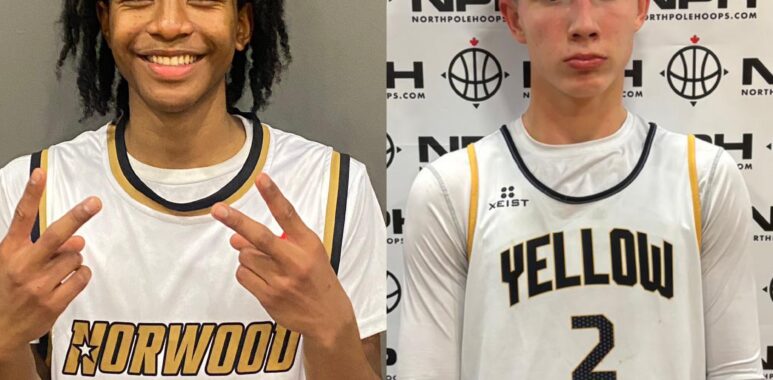
The Future: Grade 9 NPHShowcase League Top Standouts
Grade 9 Rising Stars Standouts; WAKE UP Canadian Basketball
This Grade 9 class arrived at the North Pole Hoops Showcase with intensity, confidence, and a level of polish that stood out immediately. What defined this group wasn’t just athletic talent—it was the poise, IQ, and discipline they displayed possession by possession. Throughout the event, players demonstrated how true impact goes beyond the box score: influencing pace, shaping momentum, and elevating teammates through smart decision-making.
This report highlights the top five players in six major statistical categories. Each athlete showcased qualities that translate to higher levels: situational awareness, competitive maturity, and the ability to adapt in real time. These performances not only reflect their talent today but signal the potential of a class poised to make its mark on the future of NPH and Canadian basketball.
Grade 9 ShowCase 2025/2026 Stats
| CATEGORY | LEADER | STAT |
| POINTS PER GAME | Christian Hall | 21.8 PPG |
| Luke Brajic | 18.2 PPG | |
| Alexander Igbinovia | 17.8 PPG | |
| Deo Dixon | 17.5 PPG | |
| Mikailo Osborne | 17.3 PPG | |
| REBOUNDS PER GAME | Preston Gajtanovski | 9.8 RPG |
| Moses Emmanuel | 8.3 RPG | |
| Joe Kaslauskas | 8.0 RPG | |
| Malik Richardson | 6.5 RPG | |
| Pablo Valdes | 6.0 RPG | |
| ASSISTS PER GAME | Pablo Valdes | 3.0 APG |
| Dwayne Miranda | 2.7 APG | |
| Christian Hall | 2.0 APG | |
| Noah Hoang | 2.0 APG | |
| Tai’-Reke Hall-Browne | 1.8 APG | |
| STEALS PER GAME | Pablo Vlades | 4.5 SPG |
| Edmond Oare | 3.0 SPG | |
| Issac Rossouw | 2.8 SPG | |
| Moses Emmanuel | 2.8 SPG | |
| Deo Dixon | 2.5 SPG | |
| BLOCKS PER GAME | Kaiden White | 2.0 BPG |
| Caleb Lindo Morgan | 2.0 BPG | |
| Koa Thompson | 1.4 BPG | |
| Moses Emmanuel | 1.3 BPG | |
| Ryder McGilvery | 1.0 BPG | |
| 3 POINTERS MADE (TOTAL) | Jack O’Leary | 14 3pm |
| Luke Brajic | 13 3pm | |
| Ricardo Robinson | 10 3pm | |
| Peter Matheos | 8 3pm | |
| Dwayne Miranda | 8 3pm |
POINTS PER GAME
- Christian Hall — 21.8 PPG (Blessed Sacrament)
Christian displayed an advanced scoring presence throughout the showcase, controlling possessions with confidence and an understanding of pace. He consistently found ways to create separation, attack gaps, and pressure defenses at all three levels. His scoring wasn’t simply about volume—he showed the ability to adjust based on defensive coverage, reading where advantages existed and capitalizing with precision.
Christian’s offensive presence shaped the rhythm of multiple games. His assertiveness drew defensive attention, creating space for teammates and establishing momentum whenever it was needed. Whether operating in transition or in structured sets, he showcased the instincts of a polished lead scorer who impacts not only the scoreboard but the overall tempo and decision-making of his team.
- Luka Brajic — 18.2 PPG (Blessed Sacrament)
Luka brought an aggressive offensive approach that forced defenses to react early and often. His ability to hunt quality shots, attack open lanes, and generate consistent pressure made him one of the most dangerous scoring threats on the floor. Luka understood how to manipulate defenders with movement and timing, creating efficient opportunities without overextending possessions.
Beyond the stat line, Luka’s presence influenced spacing and helped maintain offensive flow. His scoring kept opponents honest, preventing them from overloading other areas of the floor. The confidence he played with transferred to his teammates, giving the offense a steady rhythm. Luka demonstrated the mentality of a scorer who understands when to strike and how to sustain pressure over the course of a game.
- Alexander Igbinovia — 17.8 PPG (Fundamentals First)
Alexander showed a strong blend of physicality and skill in his scoring approach. He consistently positioned himself in advantageous areas, using a mix of strength, footwork, and awareness to generate high-quality attempts. His ability to convert through contact and make timely reads allowed him to maintain efficiency even against disciplined defenders.
Alexander’s scoring stretches often shifted the momentum of games. His ability to deliver during key stretches stabilized possessions and provided his team with reliable production. He responded well to defensive adjustments, showing poise in changing his angle of attack and maintaining control of pace. His presence gave his team a dependable inside-out scoring threat throughout the event.
- Deo Dixon — 17.5 PPG (Norwood Stars)
Deo played with a natural scoring rhythm, using instinct and timing to consistently apply pressure. He thrived in transition opportunities, capitalizing on space and reacting quickly to defensive movements. In the half court, he showed a strong sense of where to position himself to maximize scoring chances, demonstrating both patience and explosiveness.
Deo’s offensive consistency helped dictate tempo and shape how defenses were forced to play. His ability to spark quick runs or break down mismatches gave his team valuable bursts of momentum. Throughout the showcase, he demonstrated a mature understanding of how to influence the flow of the game without forcing possessions, making him a reliable and impactful scoring presence.
- Mikailo Osbourne — 17.3 PPG (North York Lions)
Mikailo blended confidence and control in his scoring efforts. He attacked with purpose, reading defensive spacing and using his composure to generate efficient looks. His ability to change pace within possessions helped him create separation and consistently find scoring windows.
Mikailo’s impact extended beyond putting points on the board. His ability to maintain offensive structure and provide stabilizing possessions played a key role in his team’s rhythm. He handled pressure scenarios with maturity, showing patience when needed and assertiveness when opportunities opened up. His well-rounded scoring approach made him a steady contributor in every game.
REBOUNDS PER GAME
- Preston Gajtanovski — 9.8 RPG (King Heights)
Preston dominated the rebounding category with a blend of positioning, effort, and awareness. He consistently anticipated shot trajectories and won battles through disciplined footwork and timing. His ability to secure rebounds in traffic helped control possessions and eliminate second-chance opportunities for opponents.
Preston’s presence on the glass had a direct impact on game flow. His defensive boards allowed quick transitions, while his offensive rebounds created valuable extra possessions. His activity energized teammates and provided stability in key stretches. He showed a strong understanding of how rebounding contributes to momentum and overall control of the game.
- Moses Emmanuel — 8.3 RPG (Kings Court Basketball)
Moses approached rebounding with physicality and instincts. He consistently fought for positioning and used his anticipation to track the ball effectively. His ability to read misses early gave him a significant advantage, allowing him to secure rebounds before opponents could react.
Moses also influenced pace through his work on the boards. His quick outlets jump-started fast breaks, while his presence inside anchored defensive sequences. His combination of strength, awareness, and timing made him a key factor in controlling interior space and dictating the pace of play.
- Joe Kaslauskas — 8.0 RPG (Burloak Elite)
Joe impacted games by securing tough rebounds and maintaining interior discipline. His effort level remained high throughout the showcase, and he positioned himself effectively to challenge for loose balls. His consistency on the boards helped stabilize his team in high-pressure situations.
Joe’s rebounding presence also played a role in momentum swings. His ability to terminate possessions defensively or extend them offensively reshaped game flow. Joe demonstrated a strong understanding of timing and angles, making him one of the most dependable rebounders in the field.
- Malik Richardson — 6.5 RPG (Royal Crown)
Malik brought intensity and commitment to every rebounding opportunity. He pursued the ball with determination, using both timing and physical engagement to secure boards in contested areas. His ability to consistently fight for position showcased his toughness and competitive edge.
Malik’s presence on the boards also contributed to his team’s defensive stability. By controlling rebounds and limiting second-chance points, he allowed possessions to reset and provided opportunities to dictate tempo. His energy influenced the rhythm of games and elevated team performance.
- Pablo Valdes — 6.0 RPG (CB Elite)
Pablo displayed a disciplined rebounding approach rooted in anticipation and technique. He consistently read the trajectory of shots and positioned himself early to secure boards. His timing and consistency were key to his success.
Pablo’s rebounding also supported transition offense, allowing quick outlets and smoother possession flow. His ability to impact the game through both effort and IQ made him a valuable presence, contributing significantly to pace and team balance.
ASSISTS PER GAME
- Pablo Valdes — 3.0 APG (CB Elite)
Pablo showcased a mature understanding of playmaking, delivering passes with timing, precision, and intent. He recognized gaps in defensive coverage early and used those reads to create high-percentage looks for teammates. His ability to manipulate pace, draw attention, and distribute the ball under control made him the true engine of multiple offensive runs.
Beyond raw assist numbers, Pablo shaped the structure and rhythm of his team’s possessions. He demonstrated discipline in knowing when to push tempo and when to settle into half-court actions. His poise allowed teammates to play with confidence, knowing the ball would arrive exactly where it needed to be. Pablo displayed the instincts of a natural facilitator who elevates everyone around him.
- Dwayne Miranda — 2.7 APG (Wiggins Elite)
Dwayne brought a calm and calculated approach to distributing the basketball. He identified opportunities that others might miss, often using subtle shifts in angle and pace to open passing windows. His decision-making showed a strong feel for timing and possession value, keeping the offense steady and connected.
Dwayne’s leadership through playmaking was evident in how he managed momentum. He knew when to advance the ball quickly to spark transition and when to slow down to regain composure. His ability to keep teammates involved and maintain structure made him a key contributor in orchestrating efficient, controlled offense throughout the showcase.
- Christian Hall — 2.0 APG (Blessed Sacrament)
Christian complimented his scoring ability with intelligent playmaking, showing awareness of how defensive attention could be used to create opportunities for others. He leveraged his gravity as a scoring threat to deliver timely passes and exploit rotations. His unselfishness made him more unpredictable and difficult to contain.
Christian’s passing also played a role in pace control. He recognized when defenses were shifting heavily toward him and used that pressure to generate rhythm for his teammates. His ability to balance scoring with facilitating highlighted his evolving versatility and understanding of the broader offensive picture.
- Noah Hoang — 2.0 APG (Burloak Elite)
Noah displayed strong decision-making and accuracy as a passer. He consistently found teammates in rhythm, whether in transition or half-court sets. His awareness allowed him to identify openings before they fully developed, leading to efficient and purposeful ball movement.
Noah’s playmaking also helped sustain offensive balance. His consistent involvement kept the team flowing, preventing stagnant possessions and maintaining spacing. He demonstrated the vision and composure necessary to direct possessions and ensure the offense operated at an effective tempo.
- Tai’-Reke Hall-Browne — 1.8 APG (G2S Game Changers)
Tai’-Reke approached playmaking with a blend of creativity and patience. His ability to probe defenses, keep his dribble alive, and find teammates in advantageous positions demonstrated strong poise. He made reads with confidence and delivered passes that allowed teammates to capitalize quickly.
His decision-making influenced the rhythm of the offense, creating smoother possessions and reducing turnovers. Tai’-Reke’s passing instincts added a valuable layer to the team’s offensive structure, providing stability and enhancing spacing throughout the showcase.
STEALS PER GAME
- Pablo Valdes — 4.5 SPG (CB Elite)
Pablo showed elite anticipation on the defensive end, consistently reading passing lanes and predicting movements before they developed. His quick hands and disciplined footwork allowed him to generate turnovers without overcommitting, turning defense into instant offense.
Pablo’s presence disrupted opposing guards and forced constant adjustments. His ability to alter the rhythm of opponents’ possessions shaped the tempo of entire games. His defensive instincts not only limited scoring opportunities but also produced momentum-shifting plays that energized his team at key moments.
- Edmond Oare — 3.0 SPG (CB Elite)
Edmond made a major impact with his defensive pressure, using agility and awareness to create turnovers. He applied ball pressure effectively and anticipated dribble patterns, leading to clean, controlled steals. His activity on the perimeter consistently challenged opposing guards.
Beyond the steals themselves, Edmond influenced the pacing of games by forcing opponents into rushed decisions. His defensive presence helped disrupt offensive sets and created opportunities to push the ball in transition. His instincts made him a constant threat to shift momentum through defensive effort.
- Issac Rossouw — 2.8 SPG (Momentum Basketball)
Issac showed strong reads on the ball and excellent timing in contesting passes. His ability to predict movements allowed him to intercept plays and initiate quick counterattacks. His defensive instincts reflected a high level of awareness and discipline.
His impact extended beyond creating turnovers. Issac’s presence forced ball-handlers to play more cautiously and altered how opposing teams structured possessions. His consistency in disrupting rhythm helped anchor his team’s perimeter defense, contributing significantly to momentum control.
- Moses Emmanuel — 2.8 SPG (Kings Court Basketball)
Moses displayed impressive versatility defensively, capable of guarding multiple positions while generating turnovers through anticipation. He used his length and timing to disrupt passing angles and capitalize on mistakes, turning defensive pressure into scoring opportunities.
His steals often came in moments that shifted energy and pace. Moses’ ability to read plays early and apply physical, controlled pressure helped limit offensive flow for opponents. His defensive presence contributed to sustained team intensity and dictated the tempo of several games.
- Deo Dixon — 2.5 SPG (Norwood Stars)
Deo brought an active defensive motor and sharp instincts. He pursued opportunities aggressively but with control, using timing to poke balls loose and intercept passes. His quick reactions allowed him to capitalize in transition.
His ability to generate turnovers affected offensive strategies for opposing teams. Deo’s defensive reads consistently interrupted rhythm, opening windows for fast breaks and momentum swings. His blend of effort and awareness made him a reliable defensive disruptor throughout the showcase.
BLOCKS PER GAME
- Kaiden White — 2.0 BPG (Kings Court Basketball)
Kaiden established himself as a strong interior defender, using timing, length, and positioning to contest and block shots. He consistently met opponents at the rim with discipline, altering attempts and forcing tough finishes. His presence in the paint made drives far more difficult for opposing offenses.
Kaiden’s shot-blocking also anchored his team’s defensive structure. His ability to protect the rim allowed perimeter defenders to apply more aggressive pressure, knowing help was behind them. His impact reached beyond the blocks themselves—he shaped spacing, controlled the lane, and influenced shot selection throughout games.
- Caleb Lindo Morgan — 2.0 BPG (King Heights)
Caleb used strong instincts and anticipation to challenge drivers and disrupt interior scoring attempts. He displayed the ability to stay vertical, time contests, and meet shots at their peak, forcing opponents to adjust. His consistency made him a dependable presence around the basket.
Caleb’s defensive awareness helped maintain structure in high-pressure situations. His shot-blocking discouraged attacks inside, allowing his team to tighten their perimeter defense. His ability to influence both direct contests and nearby shots demonstrated his complete impact as a rim protector.
- Koa Thompson — 1.4 BPG (First Step Elite Gold)
Koa demonstrated mobility and timing in his shot-blocking ability. He rotated quickly to help, challenged plays above the rim, and consistently used his length to alter finishing attempts. His awareness allowed him to take efficient angles to contest without fouling.
His presence influenced how opponents approached the interior, often causing hesitation or forced adjustments. Koa’s ability to protect the rim contributed significantly to defensive momentum, anchoring possessions and helping control game tempo.
- Moses Emmanuel — 1.3 BPG (Kings Court Basketball)
Moses extended his defensive presence into the paint with well-timed shot contests and strong rotational awareness. His ability to anticipate drives and meet opponents at the rim made him a versatile defensive asset.
His shot-blocking also helped reinforce team discipline. Moses controlled spacing inside, preventing high-percentage opportunities and supporting more aggressive perimeter pressure. His ability to influence shots, even when not recording blocks, added consistent value to the defense.
- Ryder McGilvery — 1.0 BPG (Blessed Sacrament)
Ryder used timing and positioning to provide reliable rim protection. He read offensive actions well and challenged shots without sacrificing defensive structure. His awareness allowed him to make timely contests that disrupted finishing attempts.
Ryder’s impact extended to overall defensive rhythm. His presence helped control interior space, ensuring opponents were forced into more difficult attempts. His understanding of timing and angles contributed to steady, disciplined defensive possessions.
3-POINTERS MADE (TOTAL)
- Jack O’Leary — 14 3PM (CE23)
Jack established himself as a top perimeter threat with consistent, confident shooting. His mechanics remained steady under pressure, and his ability to space the floor created openings in offensive sets. His presence alone forced defenses to extend and rethink their coverage approach.
Beyond the makes, Jack’s shooting influenced pace and decision-making. His ability to convert from deep increased offensive rhythm and generated momentum whenever he found his range. He provided his team with a dependable release valve in key moments, demonstrating the value of a pure, reliable shooter.
- Luka Brajic — 13 3PM (Blessed Sacrament)
Luka showcased range, efficiency, and confidence from beyond the arc. He stepped into shots with rhythm and displayed a strong understanding of spacing and timing. His ability to stretch the floor opened driving lanes and forced defensive adjustments throughout every game he played.
Luka’s perimeter shooting also played a key role in momentum swings. He had a strong feel for when to take advantage of defensive overhelp and consistently delivered timely makes. His shooting presence elevated team spacing and added significant pressure on opposing defenses.
- Ricardo Robinson — 10 3PM (North York Lions)
Ricardo demonstrated smooth, consistent form and an intelligent approach to shot selection. He found openings through movement and timing, capitalizing on defensive lapses with confidence. His shooting gave his team an extra layer of offensive dimension.
His ability to hit perimeter shots shifted how opponents defended ball screens and rotations. Ricardo helped maintain offensive flow by providing reliable spacing and converting at key moments. His shooting impact extended far beyond the arc, influencing overall team structure.
- Peter Matheos — 8 3PM (Blessed Sacrament)
Peter displayed a confident shooting touch, finding space on the perimeter and stepping into his attempts with stability. His ability to catch and shoot in rhythm made him a dependable option on the outside. His consistency helped maintain spacing and balance within the offense.
Peter’s shooting also added to offensive tempo. By converting from deep, he forced opponents into extended coverage, opening middle-floor opportunities for teammates. His presence contributed to smoother offensive sequences and helped sustain momentum during key stretches.
- Dwayne Miranda — 8 3PM (Wiggins Elite)
Dwayne paired his playmaking ability with effective perimeter shooting. He showed composure in his release and an understanding of when to take advantage of open looks. His shots came within the flow of the offense, helping maintain rhythm and spacing.
His shooting impact influenced how defenses played him, requiring more attention and creating passing options. Dwayne’s ability to stretch the floor added versatility to his offensive profile and helped generate additional scoring avenues for his team.
A Class Built on IQ, Poise, and Competitive Fire
The Grade 9 North Pole Hoops Showcase served as a powerful reminder of the rising talent emerging across the country. This group didn’t simply compete—they demonstrated an advanced understanding of how to influence the game in real time. Whether through scoring bursts, commanding the glass, making sharp reads as playmakers, or altering momentum with defensive anticipation, every athlete featured proved capable of impacting winning in meaningful ways. Their performances revealed a level of maturity, discipline, and instinct that sets the foundation for long-term development.
What stood out most wasn’t just the individual skill, but the adaptability and composure these players showed in high-tempo, high-pressure situations. They embraced challenges, made thoughtful decisions, and displayed the kind of presence that elevates team performance. As they continue to grow physically and refine their skills, their understanding of pace, spacing, and responsibility will only strengthen. The future of this class is bright, and the showcase affirmed that these athletes are not only prospects to watch—but players capable of shaping the next era of Canadian basketball.
